
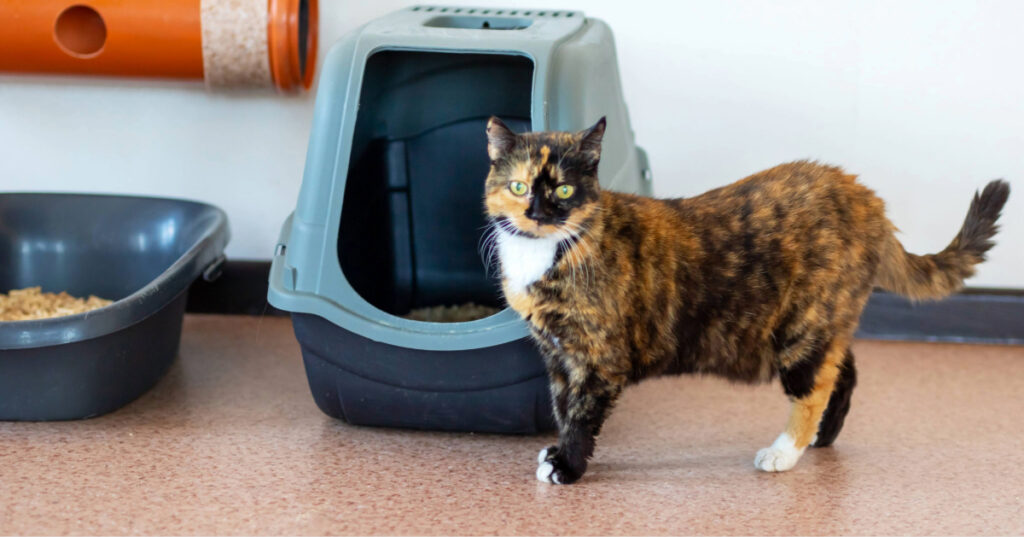
If your cat is pooping outside the litter box, you’re not alone, and you’re right to take it seriously. A cat pooping outside the litter box almost always has an identifiable cause. Whether it’s a medical issue, a behavioral trigger, or something as simple as a dirty box, understanding why it’s happening is the first step toward solving it. At Minnieville Animal Hospital in Woodbridge, VA, our veterinary team helps families work through exactly this kind of problem every day.
Is It a Medical Problem or a Behavioral Problem?
When a cat starts pooping outside the litter box, one of the first questions to ask is whether something medical is going on. Many cat owners assume it’s a behavioral issue, but health problems are actually a leading reason cats eliminate outside their box. Before jumping to training solutions, a visit to the vet is always the right move.
Medical Causes of Inappropriate Defecation in Cats
Several health conditions can cause a cat to poop outside the litter box. If your cat is straining, producing very small or unusually shaped stools, or seems uncomfortable during elimination, a medical cause is likely. Some of the most common include:
- Constipation or obstipation: When stool becomes difficult or painful to pass, cats may associate the litter box with discomfort and try to go elsewhere.
- Diarrhea or colitis: Loose, urgent stools can make it impossible for a cat to reach the box in time, especially if inflammation of the colon (colitis) is involved.
- Arthritis or joint pain: Older cats may find it physically difficult to climb into a high-sided litter box, leading them to go on the floor nearby.
- Parasites: Intestinal worms and other parasites can cause gastrointestinal upset that disrupts normal litter box habits.
- Neurological issues: In some cases, nerve or spinal cord problems affect a cat’s ability to control elimination.
If you notice your cat is pooping outside the litter box suddenly, especially if this is a new behavior, scheduling a veterinary exam promptly is important. Sudden changes in litter box habits are often the first sign that something is wrong internally.
Why Do Cats Poop Outside the Litter Box for Behavioral Reasons?
Once medical causes have been ruled out, behavioral factors come into play. Cats are highly particular animals, and even small changes in their environment can disrupt their litter box routine.
Litter Box Cleanliness
This is the number-one behavioral reason cats poop outside the litter box. Cats have a powerful sense of smell, and a dirty box is deeply unappealing to them. Most cats prefer their box to be scooped at least once daily and fully cleaned on a regular basis. If the box smells too strongly of previous waste, many cats will simply find another spot.
Litter Box Size, Type, and Location
Cats have preferences about their bathroom environment and those preferences matter. A box that’s too small, has sides that are too high, or is placed in a noisy or high-traffic area can deter use. Covered boxes trap odors and may feel claustrophobic to some cats. The general guideline is that a litter box should be at least 1.5 times the length of the cat.
Location is just as important as size. Cats don’t want their bathroom near their food and water bowls, and they prefer privacy. Placing a box in a low-traffic, accessible spot often resolves the problem when location is the culprit.
Not Enough Litter Boxes
The standard recommendation from veterinary behaviorists is to have one litter box per cat, plus one extra. So in a two-cat household, you’d ideally have three boxes. When cats have to compete for litter box access or when a dominant cat is guarding a shared box, the other cat may start eliminating outside the box out of necessity or stress.
Stress, Anxiety, and Environmental Changes
Cats are creatures of habit, and disruptions to their routine can trigger litter box avoidance. Moving to a new home, adding a new pet or family member, rearranging furniture, or even switching litter brands can cause enough stress to change elimination habits. If your cat recently started pooping outside the litter box following a change in the home environment, stress is a likely contributor.
How Do I Get My Cat to Stop Pooping Outside the Litter Box?
There’s no single answer, because the right solution depends on the cause. Here’s a general framework that veterinarians and veterinary behaviorists typically recommend when addressing a cat pooping outside the litter box:
- Start with a vet visit. Rule out medical causes before assuming the problem is behavioral.
- Evaluate the litter box setup. Consider the number of boxes, their size, their cleanliness, the type of litter, and their placement throughout the home.
- Reduce environmental stressors. Identify any recent changes in the home that could be causing anxiety, and try to reintroduce predictability and calm.
- Clean soiled areas thoroughly. Cats are drawn back to spots that smell like previous elimination. Use an enzymatic cleaner to neutralize odors, not just mask them.
- Try different litter types. Some cats are particular about texture or scent. Unscented, clumping litters tend to be broadly preferred.
What Does It Mean When a Cat Poops Right Next to the Litter Box?
This is a very specific scenario that pet owners may ask about, and it actually tells us something useful. When a cat poops right next to, but not inside, the litter box, it usually signals that the cat wants to use the box but something about it is off. The cat knows where it’s supposed to go, but is avoiding the box itself.
Common causes for this behavior include a box that’s too dirty, too small, or has sides that are uncomfortable or difficult to enter. In arthritic cats, a box with even a moderately high entry side can be enough of a deterrent. Switching to a low-entry box often resolves this pattern immediately in older cats.
When Should I See a Vet About My Cat Pooping Outside the Litter Box?
You should contact your veterinarian any time your cat begins pooping outside the litter box, particularly if the change is sudden or accompanied by other symptoms. At Minnieville Animal Hospital, we advise cat owners in Woodbridge and the surrounding Northern Virginia area to seek veterinary care promptly if their cat is also:
- Straining to defecate or producing very little stool
- Showing signs of blood in the stool
- Experiencing vomiting alongside changes in elimination
- Losing weight or showing a decreased appetite
- Crying out or appearing to be in pain during elimination
- Showing a sudden change in behavior or energy level
These symptoms point to a medical emergency or a serious health condition that needs immediate veterinary attention. Don’t wait to see if it resolves on its own.
What Type of Litter Do Cats Prefer?
Research on cat litter preferences consistently shows that most cats prefer fine-grained, unscented, clumping litter. The texture more closely resembles the soft soil cats instinctively prefer for elimination in nature. Strongly scented litters, while marketed toward owners who want to minimize odors, are often off-putting to cats themselves.
If you’ve recently changed litter brands and your cat started pooping outside the litter box shortly after, the new litter may be the culprit. Transitioning back to the previous brand or trying an unscented clumping option is worth doing before exploring other causes.
Help for Cat Owners in Woodbridge, VA
A cat pooping outside the litter box can be messy, frustrating, and worrying, but it’s almost always a solvable problem. Our team at Minnieville Animal Hospital is experienced in diagnosing both the medical and behavioral causes of inappropriate elimination in cats. Our veterinarians take the time to understand your cat’s full history, home environment, and health status to find the real answer.
If your cat has been eliminating outside the litter box, don’t guess. Get answers. Call Minnieville Animal Hospital in Woodbridge, VA at (703) 680-4000 or book an appointment online today to schedule an exam and get your household back on track.